|
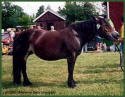 The
North Swedish Horse is a relatively young breed, with its studbook
being established in 1909. They are related to the Dole Gudbrandsdal,
having both developed from the ancient native horses of the area.
There have been infusions of Friesian and Oldenburg into the North
Swedish breed, as well as some crossings with the heavy European
draft breeds. Since 1903, there have been very strict regulations
for the breeding of the North Swedish in an effort to continue their
particular admirable characteristics. Foremost in this has been
the Stallion Rearing Institute of Wangen in Jamtland, which is now
one of the principal North Swedish studs. The
North Swedish Horse is a relatively young breed, with its studbook
being established in 1909. They are related to the Dole Gudbrandsdal,
having both developed from the ancient native horses of the area.
There have been infusions of Friesian and Oldenburg into the North
Swedish breed, as well as some crossings with the heavy European
draft breeds. Since 1903, there have been very strict regulations
for the breeding of the North Swedish in an effort to continue their
particular admirable characteristics. Foremost in this has been
the Stallion Rearing Institute of Wangen in Jamtland, which is now
one of the principal North Swedish studs.
One of the most remarkable things about
the North Swedish is their incredible strength, draft capabilities,
and endurance when compared to the relative smallness of their frame.
 They
are not a heavy draft horse in terms of the Clydesdale and Percheron,
but are ideally suited for the forest and lumber work for which
they have been principally bred. They are one of the most rigorously
tested breeds in the world, and have to undergo testing on their
pulling powers, fertility, and have X-rays of their lower legs done.
Annually there is a County Horse Days event, where stallions and
mares are examined in a number of different situations, and particular
attention is paid to temperament. There has developed a second type
of North Swedish horse, which is a finer, lighter animal, and which
has been produced with harness racing in mind. It is called the
North Swedish Trotter. They
are not a heavy draft horse in terms of the Clydesdale and Percheron,
but are ideally suited for the forest and lumber work for which
they have been principally bred. They are one of the most rigorously
tested breeds in the world, and have to undergo testing on their
pulling powers, fertility, and have X-rays of their lower legs done.
Annually there is a County Horse Days event, where stallions and
mares are examined in a number of different situations, and particular
attention is paid to temperament. There has developed a second type
of North Swedish horse, which is a finer, lighter animal, and which
has been produced with harness racing in mind. It is called the
North Swedish Trotter.
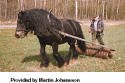 They
are willing and cooperative workers, and were used extensively for
farm and forest work in Sweden, being more efficient in these conditions
than machinery. They are also notably long lived and seem to be
relatively immune to many equine diseases. They have excellent temperament
and are very obliging - their temperament is greatly valued and
is a careful consideration when breeding. They
are willing and cooperative workers, and were used extensively for
farm and forest work in Sweden, being more efficient in these conditions
than machinery. They are also notably long lived and seem to be
relatively immune to many equine diseases. They have excellent temperament
and are very obliging - their temperament is greatly valued and
is a careful consideration when breeding.
In appearance, they have a slightly
heavy pony-type head set to a shortish but muscular and crested
neck. They are often quite long in body and have well-constructed
and reasonably sloping shoulders, which allow for their excellent
active long - striding paces. The legs should be short and strong,
with some feathering. Generally they are brown, chestnut, or dun
with black points, and stand between 15 and 15.3 hh.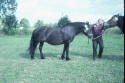
Return to Horse Breeds page
|