- Cayuse Indian Pony - |
|||
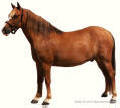
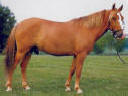
 The Cayuse Indian Pony and the Chickasaw Indian pony are two strains which stem from the earliest imports to the Americas of Iberian and Barb horses. The Cayuse Indian Pony was bred specifically to produce a hardy, strong pony with great speed. It has inherited the Iberian's noble manner and probably also has genetic links to the Missouri Fox Trotter. It was the wild horses that became the symbol of what the West stood for, with all its cattle drives, shootouts, and US Cavalry in all its glory - the wild horse, with its freedom, stamina, and endurance. The Cayuse Indian Pony is one of the little-known horses that existed in that time period. The ponies raised and ridden by the American Indians were often referred to as "cayuse" ponies. This originated in the 1800s. The Cayuse Indian Pony's conformation and background set it apart from the common mustang and other such wild horses. The small, stocky Cayuse Indian Pony sports high withers and a long cannon bone. It's distinctly slope pastern gives it a rather broken walking gait; however, younger children find this extremely pleasant and easy to ride. The Cayuse Indian pony has been immortalized in many sketches by Frederic Remington, an artist famous for his representation of the Old West. He described this pony breed as "generally roan in color, with always a tendency this way, no matter how slight." He said that his subjects were heavily muscled, and though only standing around 14 hands high, were very powerful. The history of this breed is faded and very hard to trace. It has been widely accepted that the pony descended from the French-Norman horses that were imported into Canada in the 1600s. Most of those horses were Percherons, which the local Canadians used to improve their breeds. The French Canadians brought their horses in American territory years later; it has been said that they bartered their horses in St. Louis with the Pawnee Indians, who proceeded to take the horses farther west. The Indians then crossed the French horses with the Spanish Barb, a lighter breed. This in turn tended to produce a horse that was fast and could endure a lot. Around the 1800s the Cayuse Indian Pony became a breed of its own. The Cayuse Indians, known throughout the Northwest for their incredible horsemanship, further developed this breed through selective breeding. They were able to produce some very colorful horses, due to the tendency of the French horse to pass on spots and a profusion of white markings. The Appaloosa, Paint, and Pinto horses have all been greatly influenced by the blood of the Cayuse Indian Pony. Sadly, today only a handful of these horses even exist; they are seldom seen outside California. Jeff Edwards, the co-founder of the Wild Horse Research Center in Porterville, California, has been trying to rebuild the breed and protect it from extinction. Despite his efforts, however, over 100 Cayuse Indian ponies were lost a couple of years ago, when their pasture land was sprayed with a toxic herbicide. The Research Center is optimistic about the breed's recovery, though. They recently donated a Cayuse Indian Pony to the Kentucky Horse Park (in Lexington), hoping that more people would discover the saga of this unique, vitally important horse. In addition, they work carefully with a small bunch at the farm and wait anxiously for the crop of spring foals each year. The Cayuse Indian Pony has been accepted as one of the registrars of the "Horse of the Americas" breeds. Jeff Edwards determined the purity of each and every horse based on their physical characteristics and charts that were extensively researched by the Wild Horse Research Center. The Center has established a registry for wild horses and ponies that possess Barb blood, thereby rendering the Cayuse Indian pony one of the accepted breeds.
Exmoor Event Bridle
Black Beta Biothane Single Reins
Oster Hoof Pick
Mane 'N Tail Conditioner |
|||
|