"Google It" - The Story Behind The Internet's Best Search Engine - |
|||
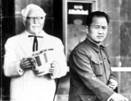
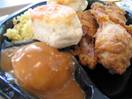
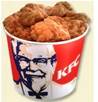
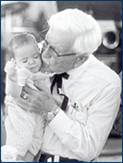
 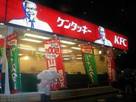 Description Kentucky Fried Chicken is one of the most world-renowned fast food restaurants in the world, and remains the world's most popular chicken restaurant chain. Today there are more than 13,000 chains around the world in 90 different countries and territories. The national KFC base is in Louisville, Kentucky. Around 8 million people are served at a KFC every single day. Timeline 1890 ' Colonel Harland Sanders, the founder of the KFC Corporation, was born. 1932 ' Colonel Sanders developed his special blend of 11 spices and herbs, which marked the beginning of his famous Original Recipe chicken. 1935 ' The Colonel became known as the Kentucky Colonel; this name is what later became incorporated in the name Kentucky Fried Chicken. 1939 ' After years spent improving the quality of his products, the Colonel improved his chicken frying process drastically by purchasing a pressure cooker. 1950 ' A highway was built right through the Colonel's town where his chicken business was'so he shut the business down and lived off his social security checks. 1952 ' He couldn't stay away - the chicken was so good that Colonel Sanders began traveling across the country, selling his chicken to restaurant patrons at a nickel apiece. This allowed his to begin franchising his special blend of spices for his chicken.
1964 ' Colonel Sanders sold the KFC franchising corporation, now doing rather well, to John Brown Jr. for $2 million. At this point in time, there were more than 600 KFC franchises in the USA. 1966 ' KFC went public with its franchises and special chicken recipe. 1969 ' KFC was listed on the New York Stock Exchange for the first time. 1971 ' Heublin, Inc. acquired over 3,500 Kentucky Fried Chicken franchises for the petty sum of $285 million. 1973 ' The first KFC opened overseas, Malaysia being the first lucky recipient of the American owned and operated corporation. 1976 ' Colonel Sanders received an award for becoming the world's second most recognizable celebrity. 1980 ' Sadly, Colonel Sanders passed away. However, his legacy carried on and is still widely recognized today. 1982 ' R.J. Reynolds bought Heublin Inc., and in turn KFC became a subsidiary of RJR. 1986 ' PepsiCo acquired the KFC Corporation from R.J. Reynolds for $840 million. 1995 ' KFC started an award program, the Colonel's Way Award, to recognize senior citizens that are living life to the fullest and do all they can despite their age. 1997 ' PepsiCo announced its spin-off of fast-food restaurants, KFC, Taco Bell, Pizza Hut, A&W, and Long John Silvers, into a separate company entirely ' Tricon Global Restaurants. 2000 ' KFC founded the Colonel's Kids Charity to help kids afford education and get a good start in life 2002 ' Tricon Global became Yum! Brands, Inc., which it remains to this day. 2005 ' Today there are 13,266 KFC franchises around the world, 5,525 in the U.S. alone.
External Environment
-Owners Gregg C. Dedrick, age 45, President of KFC Corp. Many individual owners of franchises and establishments around the globe Yum! Brands, Inc. owns KFC Corp. today -Customers Consumers continue to return to KFC because of the quality and good prices of their food KFC has a lot of fans and continues to grow to provide better customer service -Suppliers Companies who provide KFC with raw materials and chicken -Competitors Chick-fil-a is KFC's biggest competitor, and quickly growing in popularity
Other competitors include AFC Enterprises and McDonald's -Indirectly Interactive Forces State and government taxes Economic situation and food availability Legal and political guidelines for animal treatment
Mission Statement 'Recognition: we find reasons to celebrate the achievements of others and have fun doing it,' is right up there with 'Customer Focus' and 'Belief In People.' "Recognition is everybody's responsibility," says Chicago restaurant manager Adonis Chapel. He explains that since KFC started encouraging informal recognition, things have really changed. "You keep employees longer, they are happier, they work better for you."
'We at Yum! Brands, Inc., pledge to conduct our business according to this set of truths, which we believe to be the foundation for building the best restaurant company in the world.' The founding truths are: People Capability First'Satisfied customers and profitability follow. Respond To The Voice Of The Customer'Not just listen. The Restaurant General Manager Is Our #1 Leader'Not senior management. Run Each Restaurant As If It's Our Only One'Avoid the trap of the averages. Recognition Shows You Care'People leave when you don't. Great Operations and Marketing Innovation Drive Sales'No finger pointing. Operation Discipline Through Process and Standards'Consistency, not 'program of the month'. Franchisees Are Vital Assets'Operate as one system, not two. Quality In Everything We Do'Especially the food.
Vision Quoted from Yum! Brands, Inc., KFC's parent corporation: 'Our passion, as a restaurant company, is to put a YUM on people's faces around the world, satisfying customers every time they eat our food and doing it better than any other restaurant company. A&W, KFC, Long John Silver's, Pizza Hut, and Taco Bell offer customers food they crave, comeback value, and customer-focused teams. The unique eating experience at each of our restaurants make our customers smile and inspire their loyalty for life. Toward that end, our 750,000 associates around the world are trained to be customer maniacs.'
Strategy Quoted from Yum! Brands, Inc., KFC's parent corporation: 'The company's long-term strategy is focused around key areas of strength and opportunity, built on Yum! Brands' foundation as the franchisor of its brands: A&W All-American Food, KFC, Long John Silver's, Pizza Hut, and Taco Bell worldwide. The company operates with five long-term measures identified as essentials of corporate growth and progress . . .' 1. International Expansion 'Yum! Brands number-one goal is to drive global expansion with its category-leading brands. In 2002, the company opened a record 1,051 new international restaurants and increased international system sales 9% prior to foreign currency conversion.' 2. Multibrand Innovation & Expansion 'Yum! Brands is the worldwide leader in multibranding, offering consumers more choice and convenience at one restaurant location from a combination of two of the company's brands. The company and its franchisees today operate over 1,975 multibrand restaurants, generating over $2 billion in annual system sales. Approximately 350 new systemwide multibrand restaurants were opened in 2002.' 3. Portfolio of Category-Leading U.S. Brands 'U.S. systemwide same-store sales increased approximately 4% while U.S. same-store sales at company restaurants increased approximately 2% in 2002.' 4. Global Franchise Fees 'Global franchise fees, a significant factor in annual profits and cash flow, grew 6% to $866 million. Global franchise net restaurant growth was 2% in 2002.' 5. Strong Cash Generation and Returns 'Yum! Brands generated over $1.3 billion in cash from all sources in 2002, more than fully funding capital expenditure needs, allowing free cash flow for share repurchase, and some repayment of debt. Return on invested capital is 18%, in the restaurant industry's top tier.'
Culture - Big on diversity in the workplace - Promotes differences in background, ethnic cultures, and values - Team-oriented environment - Focuses on teaching everybody something new - Promotes unity in the workplace - Focuses on building relationships and creating diversity and commitment within the company and amongst employees and customers
Organizational Structure and Design - KFC is part of a divisional structure, which is Yum! Brands, Inc. - Long John Silver's, A&W, Taco Bell, and Pizza Hut are the other divisions - Offers positions to many people; good for senior executives - Willing, responsive, and flexible to change and growth - KFC works to bring recognition and money to Yum! Brands, Inc.
Human Resource Management 'We won't make you wing it' is KFC's motto when it comes to training employees. ' Training includes: 1) Workbooks 2) Quizzes 3) On-the-job competency based training ' Employees are encouraged to work together as a team ' KFC is committed to making sure their people grow to their highest potential ' KFC does their best to make the job interesting and exciting for workers
Social Responsibility ' KFC has made it their responsibility to consumers that they will provide quality chicken in a fast, efficient way. '
They also say that their meat comes about ethically and through humane treatment. This
has not always proved true in the past, since the PETA has become involved with their warehouses
that 'grow' the chickens. KFC has made statements to the patrons of KFC,
' KFC sponsors a reward for senior citizens, those who live life to the fullest and are recognized in their community ' KFC also has the Colonel's Kids program, a charity organization that helps kids become educated and grow up in a better world than that which they have known. It addresses the child care crisis and steps up to the plate to help out where possible. ' Scholarships and diversity programs are a part of KFC's social responsibility as well Recently, the PETA group secretly recorded a worker at the Pilgrim's Pride, one of the processing plants, beating a live chicken against the wall in order to kill it. As soon as KFC was notified of this treatment, they immediately submitted a written statement saying that the treatment was 'appalling' and took action immediately, placing an animal welfare expert at the plant to ensure the ethical, humane treatment of the chickens. The statement said that: "We do not tolerate animal abuse by any of our suppliers, under any circumstance.' KFC also told the company Pilgrim's Pride that, "unless they can definitively assure us there are absolutely no abuses taking place, we will not purchase from this Moorefield, West Virginia, facility.' PETA says that more action should be taken, but KFC has done all it can to ensure that people are happy with the facilities and means by which their food comes about.
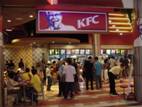
International Operations ' KFC opened its first franchise overseas in 1973 in Malaysia ' KFC is a very diverse company and has 750,000 people employed around the world ' 7,741 of the Kentucky in China, Japan, Korea, Germany, Italy, the Bahamas, etc. ' KFC is devoted to Fried Chicken franchises are in countries other than the United States ' The incredible success of this company has given it the opportunity to compete globally with other corporations and gain in popularity worldwide ' KFC franchises are located diversity and is willing to give just about anyone a chance to begin their career by working at one of their locations ' they are good at choosing a range of people to work at their stores, whether different by race, religion, skin color, or heritage. ' Expanding their global business is one of Yum! Brands, Inc.'s key growth strategies ' In 2001, KFC opened their 500th store in China, the fastest growing and most profitable country outside the U.S. KFC was rated the #1 brand in the entire country for that year ' KFC (as a division of Yum! Brands) continues to grow substantially throughout the world as a fast food enterprise, and there is much more success and growth in the future
Kentucky Fried Chicken is a registered trademark of Yum! Brands, Inc. Analysis The Kentucky Fried Chicken Corporation is a very successful company that has grown to be the fast food giant it is today through good management practices and good planning. Their mission statement is very clear: recognition is key. They are all about diversity and helping people grow in any way they can, and focus on customer satisfaction as well. Their parent corporation, Yum! Brands, Inc., states that they want to put a Yum! on people's faces around the world. Their goals include being the best in the business, which they have definitely accomplished, and focusing on customer satisfaction as a major part of their environment. KFC desires to offer good food, comeback value, and customer-focused teams to consumers throughout the world; they want to have loyal customers who will come back time and time again to enjoy their food. From its start in 1939 all the way to the present date, KFC has been a hit in the fast food industry. Their company history is pretty incredible, especially watching huge sums of money accumulate for sale as the company passed from hand to hand from John Brown Jr., to RJR, to Heublin Inc, to PepsiCo, to Tricon Global Industries, and finally to Yum! Brands, Inc. The company has done a lot for the community and kids all over the world. KFC has grown to be a huge network of franchises around the globe; there are a total of 13,266 KFC franchises around the world today ' 5,525 of those are in the United States alone. KFC has created a strategy that is focuses on strength and opportunity. They want to expand internationally, offer consumers more choices at their restaurants, and provide good services to their customers. They have incorporated a growth strategy into their company because they fully intend to be the largest fast food chicken corporation in the world; they seem to have already accomplished this goal, but also intend to stay well ahead in the game by franchising KFC buildings throughout every country in the world. Kentucky Fried Chicken part of a divisional structure, one in which departments are grouped together according to the outputs of the organization and each separate division is responsible for producing one single item or product. KFC is part of the divisional structure of Yum! Brands, Inc., their parent corporation. It is one huge organization that oversees several smaller companies, including Long John Silvers, Taco Bell, Pizza Hut, and KFC. KFC shows that it is a divisional structure through many aspects ' first and foremost being through focusing the attention of their managers and employees on the outcome and results for the customer or the location. Because the environment can have a great deal to do with a restaurant, they are willing and responsive to change, are quite flexible within the organization. KFC's structure within the individual companies is both mechanistic and organic ' they are very structured as far as rules and stuff goes, but have a team environment where everyone works together and decides how to solve a problem or work something out. Kentucky Fried Chicken exhibits culture through employees by having a wide range of diversity. There are 7,741 KFC's in other countries. People and employees belonging to an ethnic group often bring their cultures with them, sometimes creating subcultures. These subcultures are often derived from different customs, values, languages, traditions, and beliefs. Since Kentucky Fried Chicken values diversity, their management looks for ways to create benefits for the entire organization. Since the employees shape the company's culture, it is very important to KFC that their employees have a chance to interact and grow with a lot of different people, both through employee and customer relations. There are many examples of employee motivation that KFC and their parent company, Yum! Brands, have incorporated to empower and stimulate their employees. Not only are the employees offered an inspiring vision and mission statement, but they also have a set of founding truths with which to adhere. Some of these truths include working on people skills'that satisfied customers and profitability will follow; responding to the voice of a customer instead of just listening; quality in everything they do, especially the food; recognition shows that they care'and customers leave when they don't. They also have a good training program for new employees and encourage diversity amongst their employees. KFC has a supplier code of ethics that they use for the ethical treatment of the chickens used in the food they make. Ethical conduct is a big issue within the company; they place high value on honest employees and ethical treatment of everyone, customer, manager, and employee alike. The Kentucky Fried Chicken Corporation has done an excellent job in the consumer market, both domestically and abroad. Not only do they do a wonderful job of planning, organizing, staffing, leading, and controlling, but they have been very successful at achieving their goals as well. Having done extensive research on the company and its parent corporation, I feel like KFC has been pretty successful overall and has done a good job with hiring and retaining good employees and taking care of their consumer base in every way possible. As KFC reaches their goals, they continue to set higher and higher standards for the company to attain one day; this is a good business practice in order to maintain a lead over competitive companies such as Chick-fil-a, KFC's leading competitor. As a result of this project, we have learned a lot about the company itself as well as Yum! Brands, Inc., and about the history and background of KFC as a whole. There is a lot that goes on in the franchising world that we never really knew anything about until doing the research that went into preparing for this project/presentation. KFC's grand strategy and the organization as a whole is very impressive; through all this research I (Sally) have gained a lot of respect and admiration for what they've been through to become the giant, amazingly popular franchising company they are today. |
|||
|